 Call us: (802) 793-0488
 Available 24/7

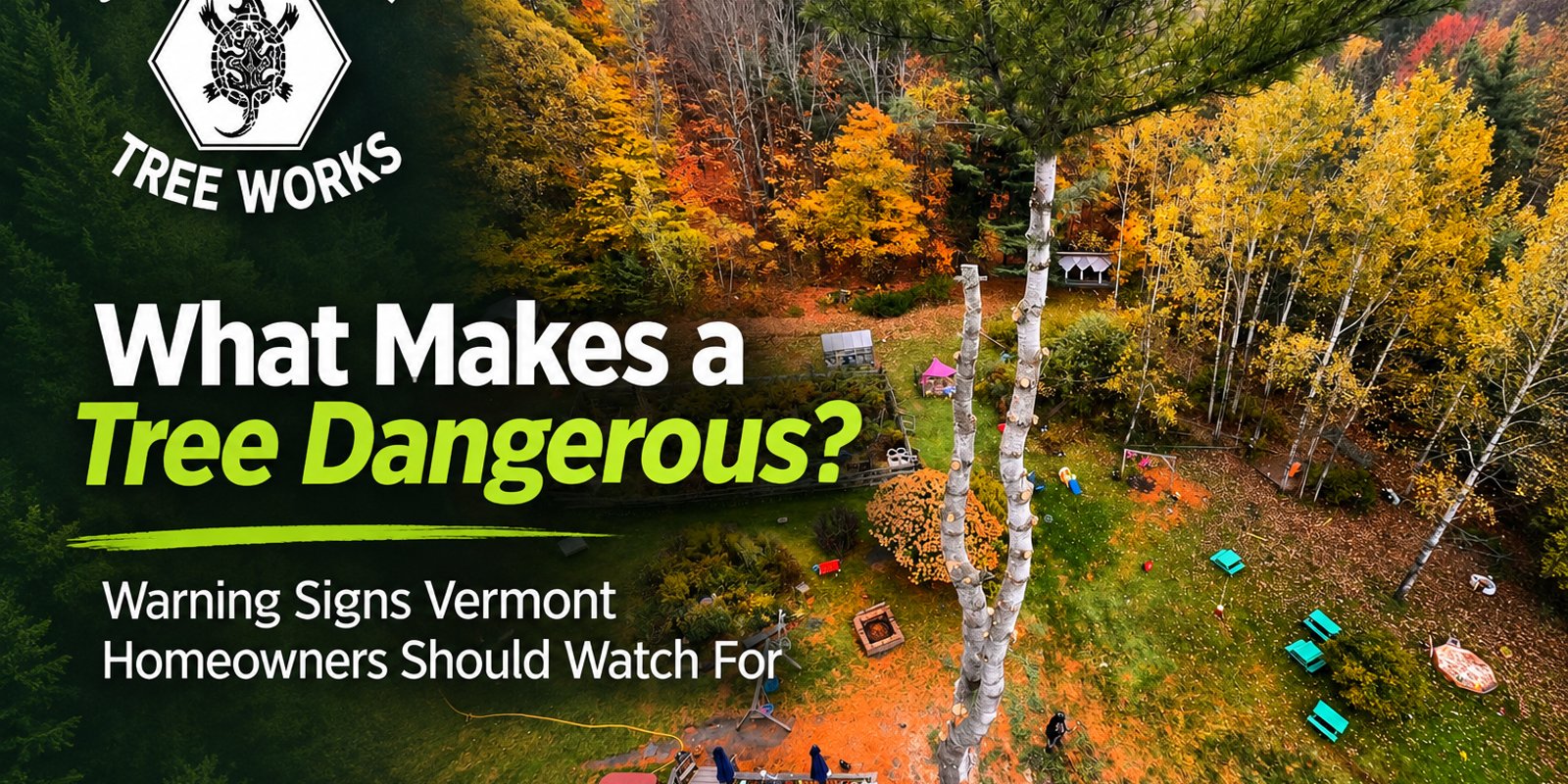
A tree becomes dangerous when its structure, roots, or surrounding conditions make it more likely to fall or lose large branches. Dead limbs, damaged trunks, exposed roots, and sudden leaning are some of the most common warning signs.
Not every damaged tree needs to come down. Some can be trimmed or monitored. Others may pose a serious risk to nearby homes, vehicles, and people.
In Vermont, heavy snow, ice storms, strong winds, and changing soil conditions can make existing problems worse. Knowing what to look for can help homeowners catch potential hazards before they turn into costly damage.
1. Dead or Dying Branches
Dead branches are one of the most common signs of dangerous trees. They can break without much warning, especially during storms.
A branch doesn't need to be completely dead to become a problem. Cracks, decay, and weak connections to the trunk can make even a living branch unsafe.
Some warning signs include:
- Large branches with no leaves during the growing season
- Cracked or broken limbs hanging in the canopy
- Branches with peeling bark and brittle wood
- Dead limbs directly above a driveway, roof, or walkway
Vermont winters can be especially hard on weakened branches. Heavy snow and ice add weight that the wood may no longer be able to support.
Removing dead limbs before winter can help reduce the risk of falling branches when the next storm rolls through.
2. A Tree That Starts Leaning
A leaning tree isn't always dangerous. Many trees naturally grow at an angle because of sunlight, wind, or the surrounding terrain.
The concern is when a tree starts leaning more than it used to.
A sudden lean may indicate that the roots are losing their grip or that the trunk has developed structural damage.
Look closely at the ground around the base. Raised soil, exposed roots, or cracks in the ground can indicate movement below the surface.
A tree leaning toward a home, garage, or power line deserves extra attention.
The biggest difference is whether the lean is new or has been there for years.
A tree that has grown at an angle for decades may be stable. One that suddenly shifts after a storm could be at risk of falling.
If you notice a new lean, avoid standing beneath the tree and have it inspected before attempting any work around it.
3. Cracks or Splits in the Trunk
A tree's trunk supports the weight of its branches and canopy. When the trunk develops a major crack, its ability to carry that weight may be compromised.
Some cracks develop slowly over time. Others appear after strong winds, lightning strikes, or heavy snow.
Vertical cracks can sometimes extend deep into the wood. Splits where two large stems meet can also create weak points.
Trees with multiple trunks deserve a closer look, especially when the trunks form a tight V-shaped connection.
These areas can trap bark between the stems and prevent a strong connection from forming.
Not every crack means a tree is about to fall. The size, depth, and location of the damage all matter.
However, a deep split or one that continues growing should never be ignored.
4. Rot and Decay Inside the Tree
A tree can look healthy from a distance while having significant decay inside.
Wood decay weakens the structure of the trunk and branches. Over time, the tree may lose the strength needed to support its own weight.
Common signs include mushrooms growing near the base, hollow sections, soft wood, and cavities in the trunk.
Fungal growth can be particularly concerning because certain fungi break down the wood that supports the tree.
However, mushrooms alone don't prove a tree is dangerous. The type of fungus and location of the decay make a difference.
Some trees can survive for years with hollow sections. Others may become unstable as decay spreads.
A professional inspection can help determine whether the remaining wood is strong enough to support the tree.
For more information on identifying unhealthy trees, read our guide on How to Identify Dead or Dying Trees.
5. Damaged or Exposed Roots
Roots do more than absorb water and nutrients. They also anchor the tree into the ground.
When a tree loses a significant portion of its root system, it may become unstable even if the trunk and branches appear healthy.
Root damage can happen during construction, excavation, driveway installation, or landscaping projects.
Erosion can also expose roots and wash away the soil that helps support the tree.
This is particularly important in Vermont, where many properties have sloped terrain, rocky ground, and areas that become saturated during spring snowmelt.
Signs of possible root problems include:
- Soil lifting around the base of the tree
- Large roots that have been cut or damaged
- Erosion exposing previously buried roots
- A tree that begins shifting after heavy rain
If a large tree has experienced significant root damage, it's worth having it evaluated.
6. Storm Damage That Hasn't Been Addressed
Vermont weather can change quickly. Strong summer thunderstorms, winter ice storms, and heavy snowfall can all leave trees with hidden damage.
A tree may survive a storm but still have cracked branches, weakened connections, or damage to its roots.
One of the biggest mistakes homeowners make is assuming a tree is safe simply because it stayed standing.
Large branches can remain lodged in the canopy after breaking. These are sometimes called hanging limbs or widowmakers.
They can fall unexpectedly, even on a calm day.
Trees that have lost a significant portion of their canopy may also need attention. The remaining branches can be exposed to wind forces they weren't previously accustomed to.
After a major storm, inspect your property from a safe distance.
If you notice hanging branches, broken tops, or visible trunk damage, consider scheduling professional tree removal services or an inspection to determine the safest approach.
7. Trees Growing Too Close to Structures
A healthy tree can still create a hazard depending on where it's growing.
Large branches extending over roofs, garages, sheds, and driveways can cause significant damage if they break.
Trees growing close to foundations or utility lines may also create problems as they mature.
That doesn't mean every tree near a house needs to be removed.
In many cases, proper pruning can reduce the risk while preserving the tree.
The important thing is understanding the tree's condition, size, and proximity to anything it could damage.
A large maple growing beside a house in Central Vermont may need a different approach than a smaller tree standing in an open yard.
Location matters just as much as the tree itself.
Why Vermont Trees Face Unique Challenges
Vermont homeowners deal with conditions that can put additional stress on trees throughout the year.
Heavy snow and ice: Wet snow and freezing rain add considerable weight to branches. White pines and other evergreens can be especially vulnerable because their needles hold snow throughout the winter.
Freeze-thaw cycles: Repeated freezing and thawing can contribute to existing cracks and affect soil conditions around roots.
Spring snowmelt: Saturated ground can reduce root stability, particularly on slopes or in areas with poor drainage.
Strong winds: Trees growing along open fields, hilltops, and exposed properties may experience greater wind pressure during storms.
Aging trees: Mature maples, ashes, and other common Vermont trees can develop structural weaknesses as they age. Emerald ash borer damage is another concern for ash trees across the state.
These conditions don't automatically make a tree dangerous. They can, however, make existing weaknesses more serious.
That's why it's worth checking your trees throughout the year rather than waiting until something breaks.
Common Mistakes Homeowners Make
One common mistake is waiting until a tree is completely dead before taking action.
A tree can become hazardous long before it dies. Structural damage, decay, and root problems can all create risks while the canopy still looks green.
Another mistake is assuming every leaning tree needs to be removed. A longstanding lean isn't necessarily a problem, but a sudden change should be investigated.
Homeowners also sometimes attempt to remove large damaged limbs themselves.
Working with chainsaws, ladders, and heavy branches can be extremely dangerous. Storm-damaged trees may have wood under tension that can shift unexpectedly when cut.
Trees touching or near electrical lines should be left to the utility company or appropriately qualified professionals.
What Should You Do If You Think a Tree Is Dangerous?
Start by looking for obvious warning signs from a safe distance.
Check for broken branches, changes in the tree's lean, cracks in the trunk, and movement around the roots.
Take photos if you notice changes. Comparing pictures over time can help identify problems that aren't immediately obvious.
Keep people and vehicles away from areas where damaged branches could fall.
If the tree shows signs of serious instability, don't wait for the next storm to have it evaluated.
An experienced tree professional can assess the situation and recommend whether pruning, monitoring, or removal makes the most sense.
Frequently Asked Questions
How can you tell if a tree is dangerous?
Look for large dead branches, deep trunk cracks, visible decay, damaged roots, or a sudden change in the tree's lean. These are warning signs that the tree may need professional attention.
Is a leaning tree always dangerous?
No. Some trees naturally grow at an angle and remain stable for decades. A leaning tree becomes more concerning when the lean develops suddenly or the surrounding soil begins lifting.
Can a healthy-looking tree still fall?
Yes. A tree may have internal decay, root damage, or structural weaknesses that aren't visible from the outside. Green leaves don't always mean the tree is structurally sound.
What trees are most likely to fall during Vermont storms?
Any tree with structural weaknesses can fail during severe weather. Trees with damaged roots, decay, weak branch connections, or heavy snow loads are more vulnerable. White pines, maples, and other common Vermont species can all experience storm damage.
Should I remove a tree that's close to my house?
Not necessarily. A healthy tree growing near a home may only need routine pruning or monitoring. Removal may be recommended if the tree has serious structural problems or poses an unacceptable risk to the property.
When is the best time to inspect trees for damage?
It's a good idea to check trees in the spring and fall, as well as after major storms. Spring inspections can reveal winter damage, while fall inspections help identify problems before heavy snow arrives.
Can dangerous trees be saved?
Sometimes. Proper pruning or other corrective work may reduce the risk without removing the entire tree. Trees with severe decay, major root failure, or extensive structural damage may need to be removed.
Concerned About a Dangerous Tree on Your Property?
If you've noticed a leaning tree, dead branches, or signs of damage, it's better to have it checked before the problem gets worse.
At Snapping Turtle Tree Works, we help homeowners throughout Central Vermont identify and address potentially dangerous trees.
Whether you need damaged limbs removed or a tree taken down, we're here to help you figure out the next step.
Contact Snapping Turtle Tree Works today to request a free estimate.